1944 · THE “STYGIA” MISSION REACHES PILI
Series “Pili in the Second World War” · Part 2 / 4
Summer 1944. From Allied headquarters in Cairo, a small American mission sets out for Evia with a strange name: “Stygia”, after the Styx, the river of the Underworld. It belongs to the OSS, the American wartime intelligence service from which the CIA was later born. It is led by Thomas Stix, a young lawyer and Yale graduate.
Evia mattered to both sides. German transports heading north passed through the Chalkida strait. If someone could watch the ships and send word by radio, Allied planes would know where to strike. That was Stix’s job.
In his own report to the OSS, now public in the CIA archive, Stix writes that the mission left Alexandria by caique on 28 May 1944 and, after delays in Cyprus and Smyrna, reached Evia on 6 July. There were three of them: Stix himself, a radio operator and an interpreter. Evia served mainly as a gateway through which other Allied teams entered central Greece. Before the OSS, Stix had served in the Middle East as a volunteer driver with the American Field Service.
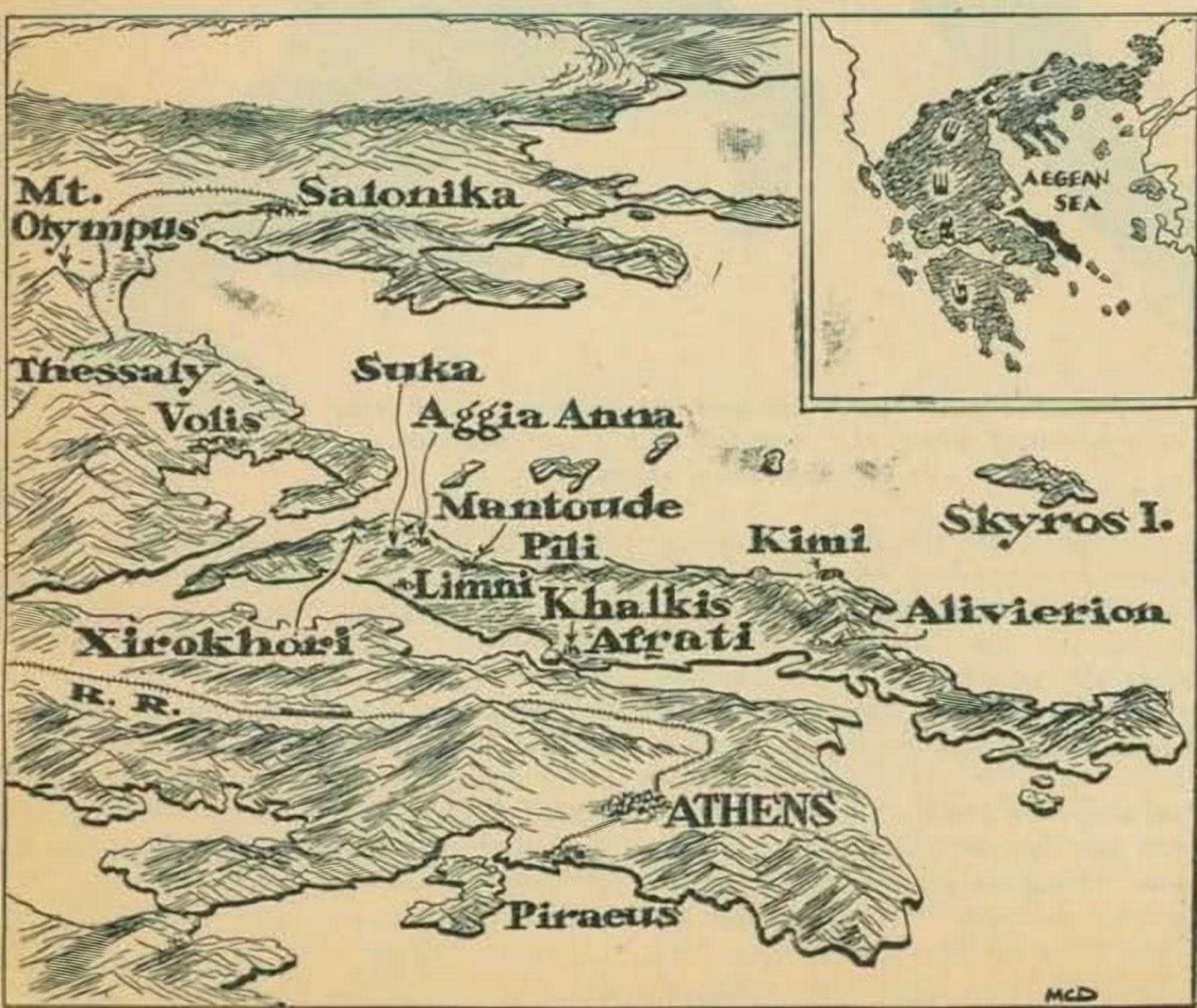
With a caique and a small machine gun for protection, the team passes by Skyros and lands at Kymasi, then goes on to Mantoudi and Limni. Everywhere people come out to welcome them with flags and flowers. Stix is moved, but also pained by the poverty he sees: barefoot children, burned houses, fields the Germans plundered at harvest time.
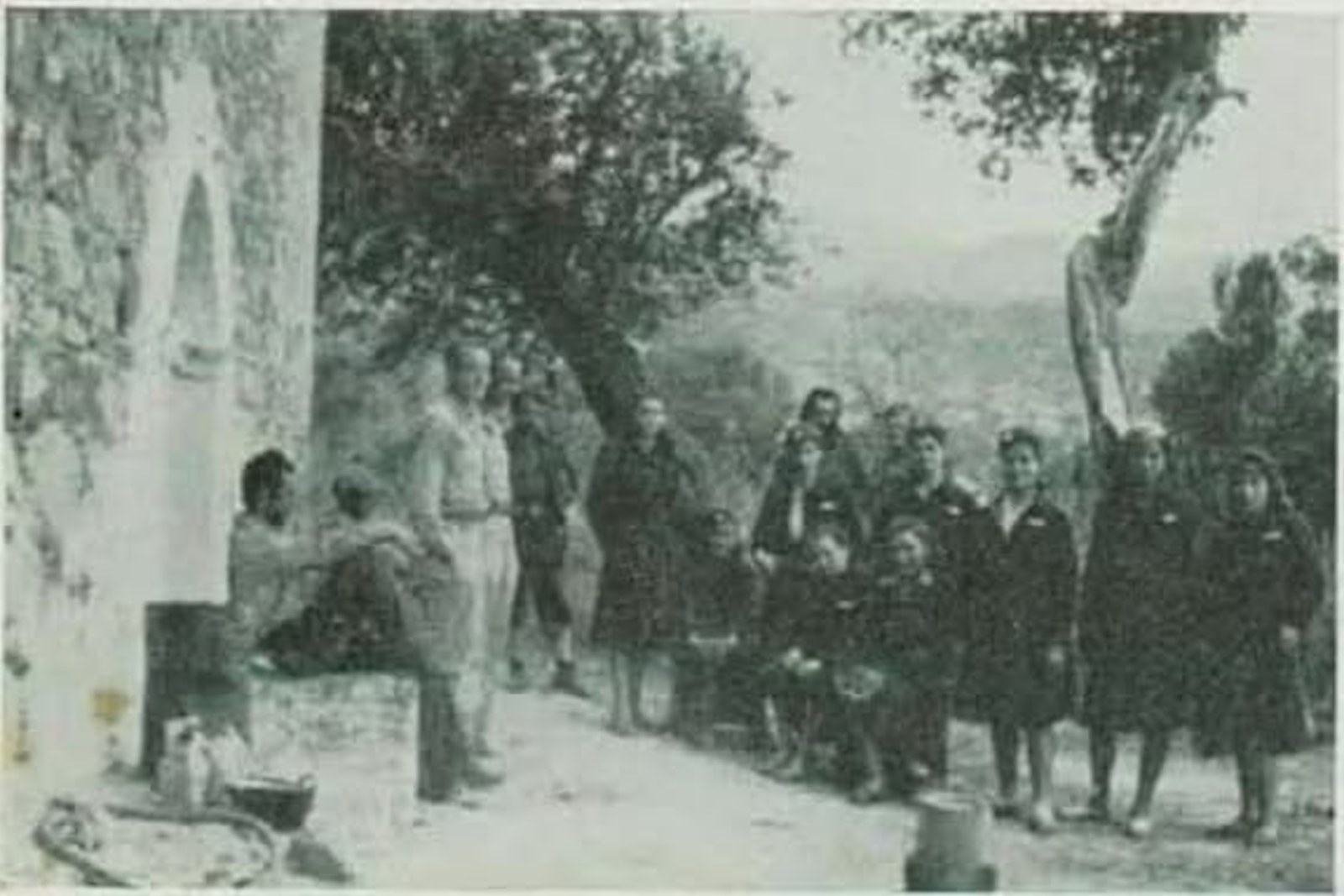
The mission sets up its headquarters in Prokopi, and one evening the celebrations end up here, in Pili. Stix remembered that on that night, after the feast, he slept on the village quay. He did not yet know how close danger was.