MOUNTAIN TEA, MUSHROOMS AND PINE HONEY
The pine-covered hills above Pili are more than a view. In the right season they give mountain tea, wild herbs, mushrooms and one of the best-known honeys of Greece. Here is how to enjoy them as the locals do: gently, in small amounts, and safely.
Collect only small amounts for your own use, leave the plants able to grow back, and respect private property and the beehives of local producers.
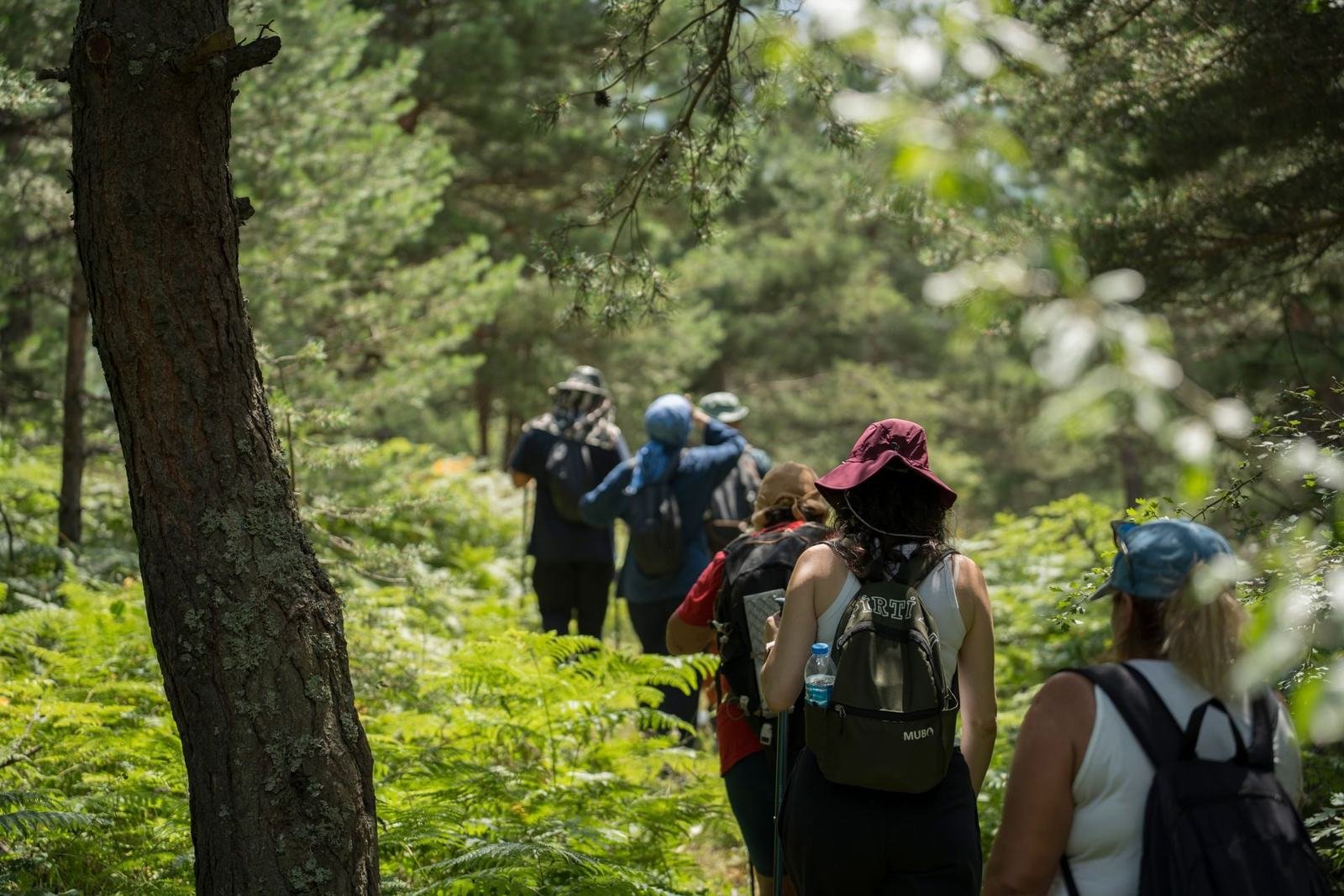
Mountain tea (τσάι του βουνού)
Greek mountain tea is the dried flowering stem of Sideritis, a silver-grey, woolly plant with small yellow flowers. In the mountains of Pili it is very common, and in early summer, when it flowers (usually June to July), you will smell it on sunny, rocky slopes. Brewed with a little honey and lemon, it is the drink of every Greek village in winter.
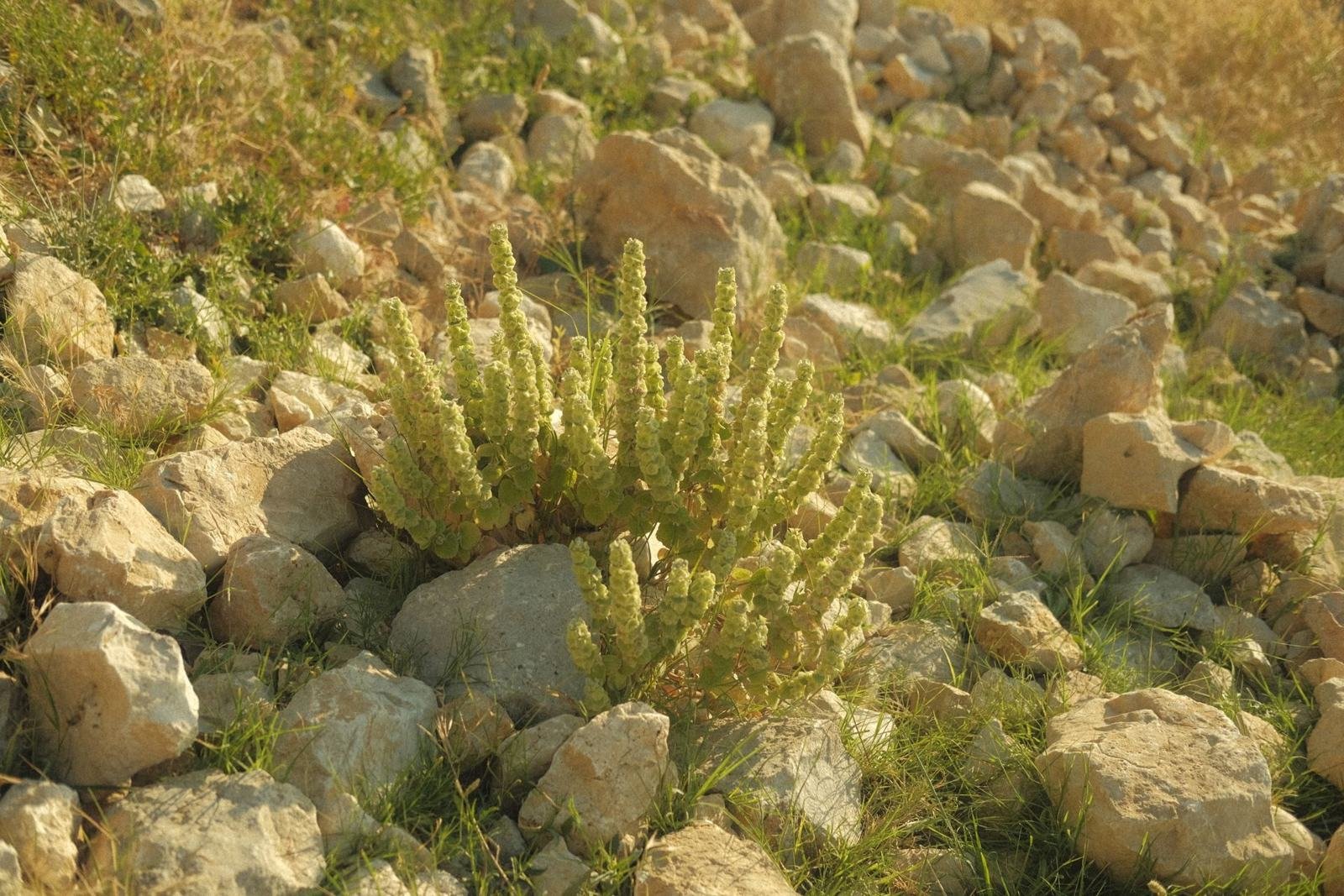
- Cut the flowering tops with scissors or a knife. Never pull the plant out by the roots.
- Take a few stems from each plant and move on, so the plant can flower again next year.
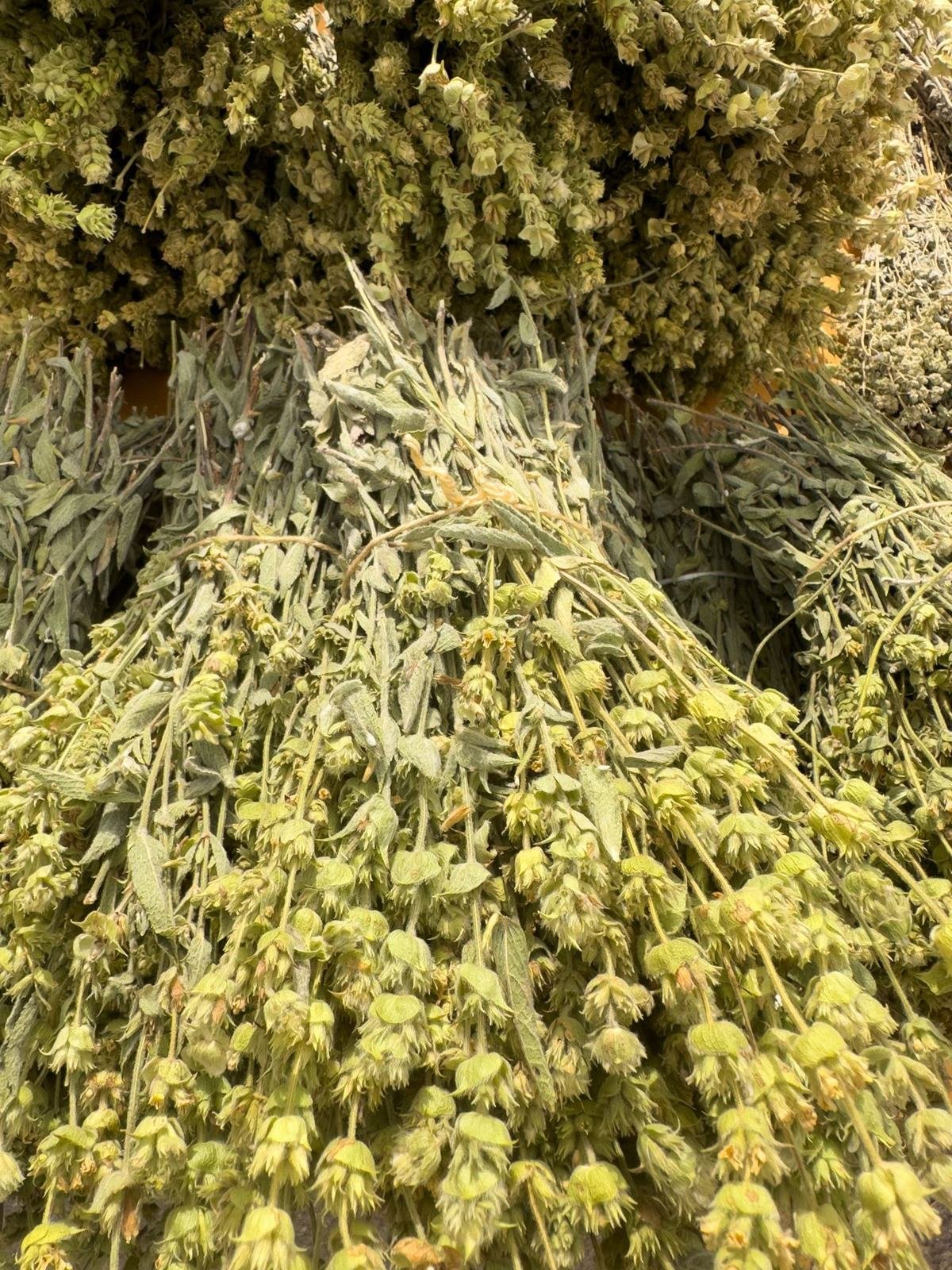
- Dry the stems in bunches in a shaded, airy place, then keep them in a paper bag or a jar.
- Evia has its own rare species (Sideritis euboea), which is threatened in parts of the island. If you are not sure what you are picking, enjoy it on the hillside and buy dried tea in the village shops instead.
Along the same paths you will find wild oregano, thyme and sage. The same rule applies: a small bunch for the kitchen, cut, never uprooted.
Mushrooms in the pine forest
After the first autumn rains (usually October to December), and again in spring, mushrooms come up under the pines and in the clearings. Mushroom hunting is a lovely walk, but it is also the one activity where a mistake can be deadly.
Golden rule: never eat a wild mushroom unless an experienced local or a mycologist has identified it in person. Some poisonous mushrooms look almost identical to edible ones, and photos or apps are not enough.
- Use a basket or paper bag, not plastic, and a knife to cut the stem.
- Do not rake the forest floor; leave young and very old mushrooms in place.
- Rules for collecting can change: ask the local Forestry Office (Δασαρχείο) for the current ones.
- If anyone feels unwell after eating wild mushrooms, call 166 or 112 at once and keep a sample of the mushroom.
- The nearest Health Centre is in Mantoudi, about 20 minutes from the village. It has doctors who can help you and an ambulance, but it is not a hospital.
Pine, blossom and fir honey, and the beehives
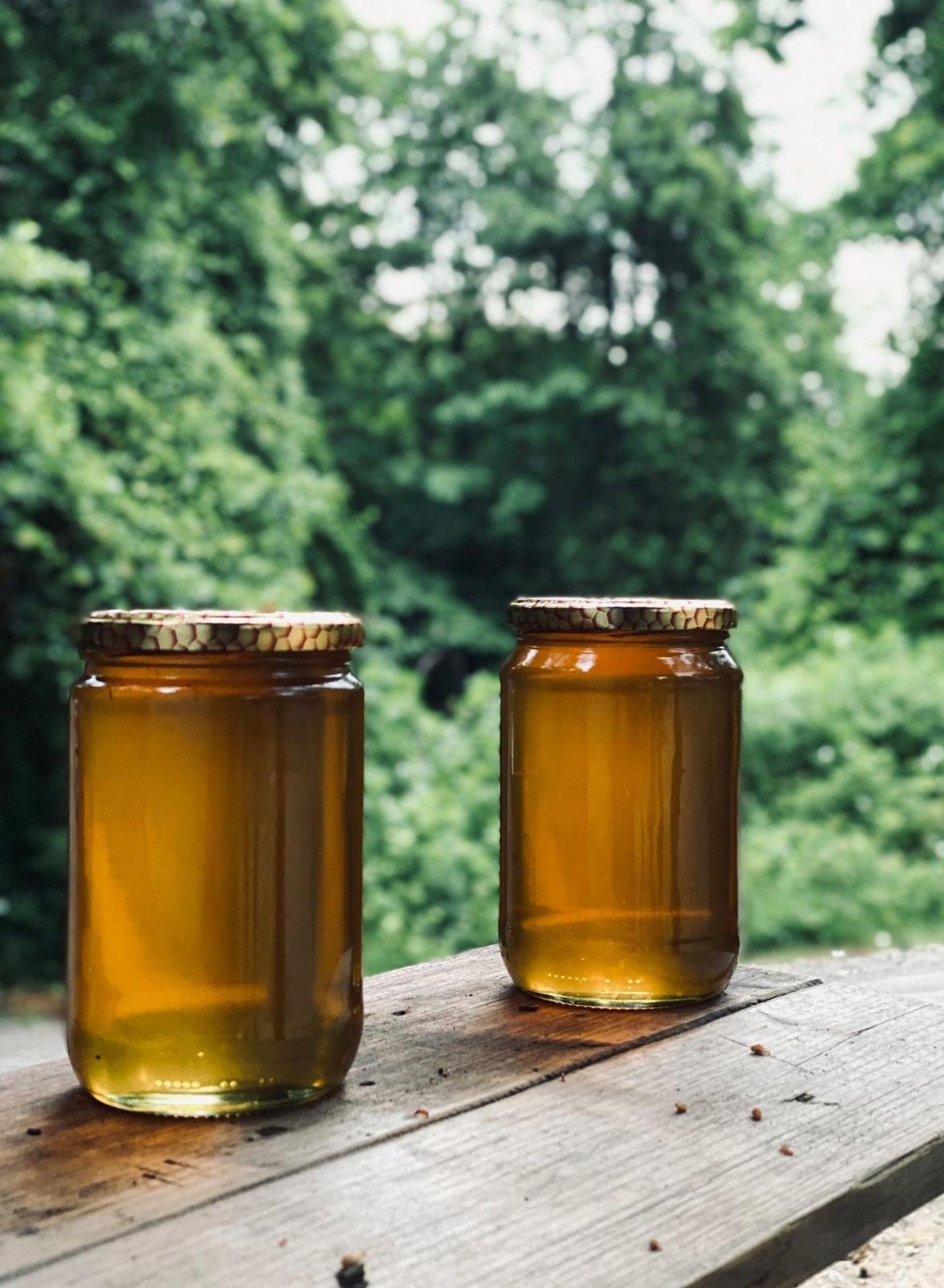
North Evia is one of the main pine-honey regions of Greece. In late summer and autumn the bees collect a sweet secretion that a small insect leaves on the pine trees, and from it they make pine honey (πευκόμελο): dark, not too sweet and rich in minerals. That is why, on your walks, you will see rows of colourful wooden beehives at the edge of the forest. They belong to local beekeepers and honey producers.
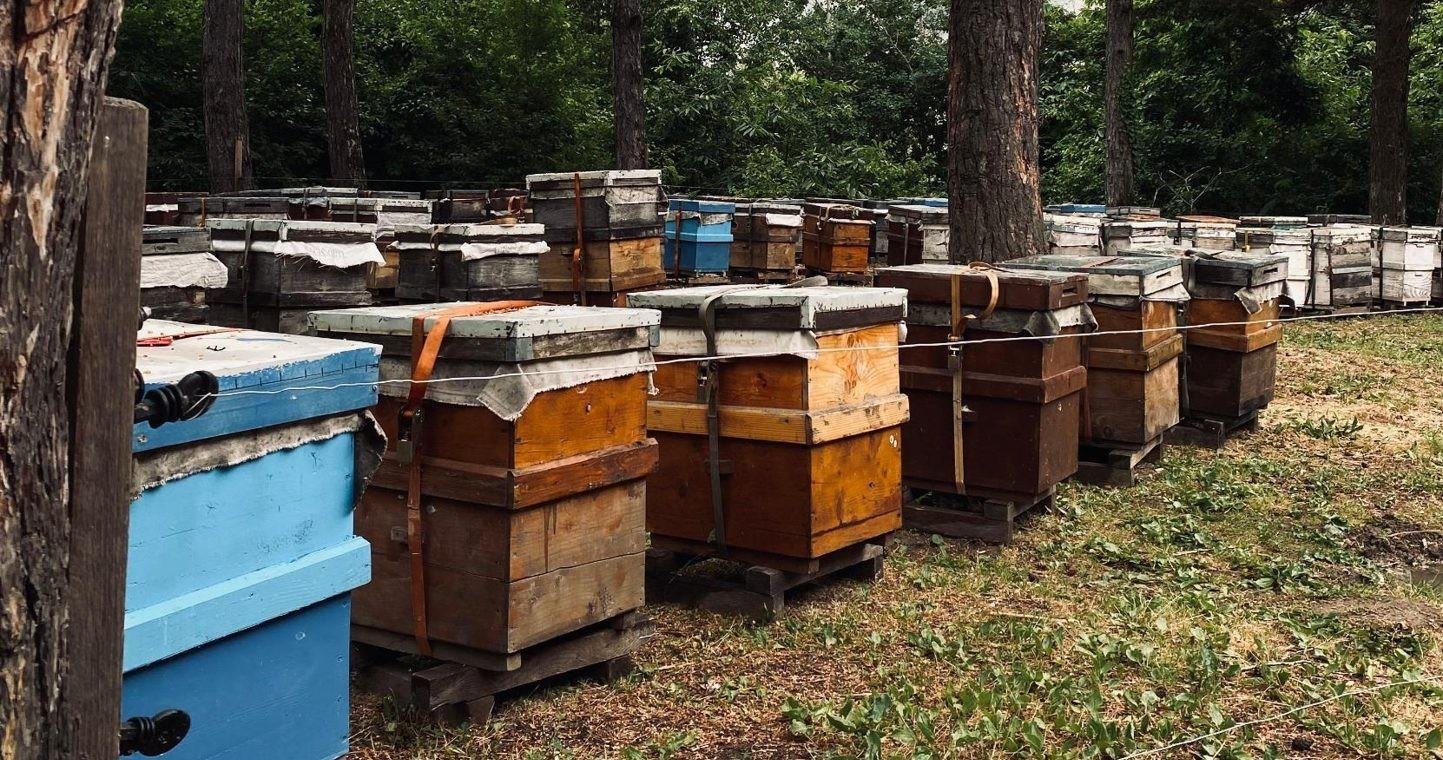
In spring the bees also make blossom honey (ανθόμελο) from the wildflowers that bloom on the slopes around the village: lighter in colour, with a floral aroma. Pili also produces fir honey (ελατόμελο) from the fir trees of our mountains: dark, thick, less sweet and with a rich, buttery taste. So, depending on the season, in Pili you will find pine honey, blossom honey and fir honey.
Pili honey is pure, organic honey. The village lies far from industry and factories, surrounded by mountains and pine forest, where the bees forage in untouched nature, far from chemicals and pollution. This clean, healthy environment has drawn beekeepers from all over Greece to Pili, who bring their hives here every year.
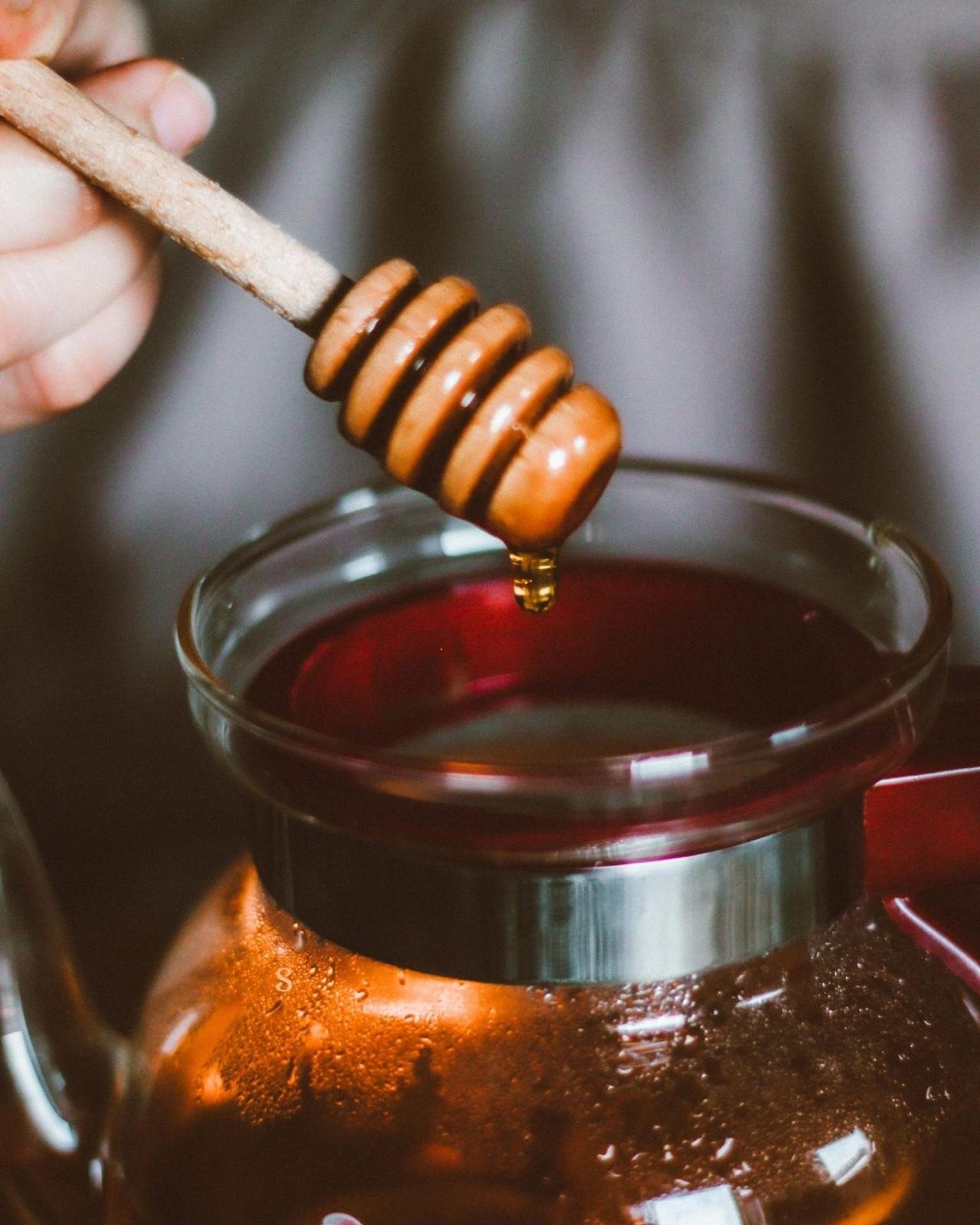
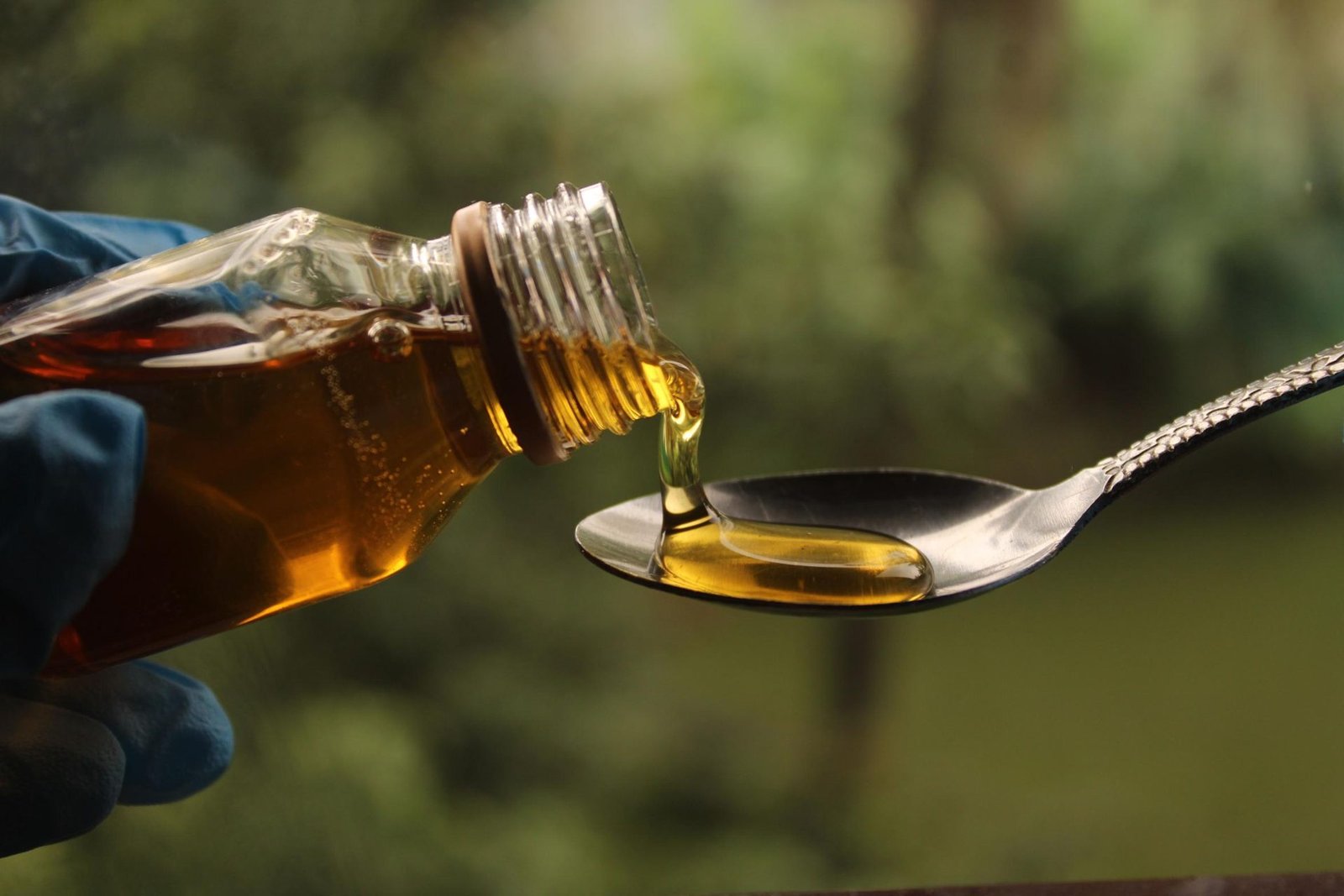
For Greeks, honey is not only for desserts, coffee or yoghurt. It is also a grandmother’s remedy: a spoonful of honey in hot mountain tea with lemon for a sore throat or a cough, a spoonful in the morning for energy, a little honey on a small cut or burn. Pine honey is rich in minerals and antioxidants, less sweet and slow to crystallise, and many consider it one of the healthiest honeys. (Honey should not be given to babies under one year old.)
- Keep a good distance from the hives and never open, move or touch them.
- Do not stand in front of the hive entrances: that is the bees’ flight path.
- If bees come close, stay calm, do not wave your arms, and walk slowly away.
- Bees are most active on hot, sunny days in summer: plan your route away from the hives.
- Want to taste honey from the village? You can buy it in most of the village’s shops (mini markets), which promote local products: honey, oregano and mountain tea.
Take a small emergency kit
Help can be far away in the mountains, so carry a small first-aid kit, especially if you or someone in your group has allergies.
- If you have a known allergy to bee or wasp stings, always carry the adrenaline auto-injector your doctor prescribed, and make sure your companions know where it is.
- Antihistamine tablets, tweezers or a plastic card to scrape out a sting, plasters, antiseptic and a cold pack.
- Plenty of water, sunscreen and a charged phone. Emergency number: 112 (ambulance 166).
If you are stung: scrape the sting out sideways, wash the area and put something cold on it. If there is swelling of the face or throat, difficulty breathing or dizziness, use the auto-injector if you have one and call 112 immediately.
Dress properly, even in summer
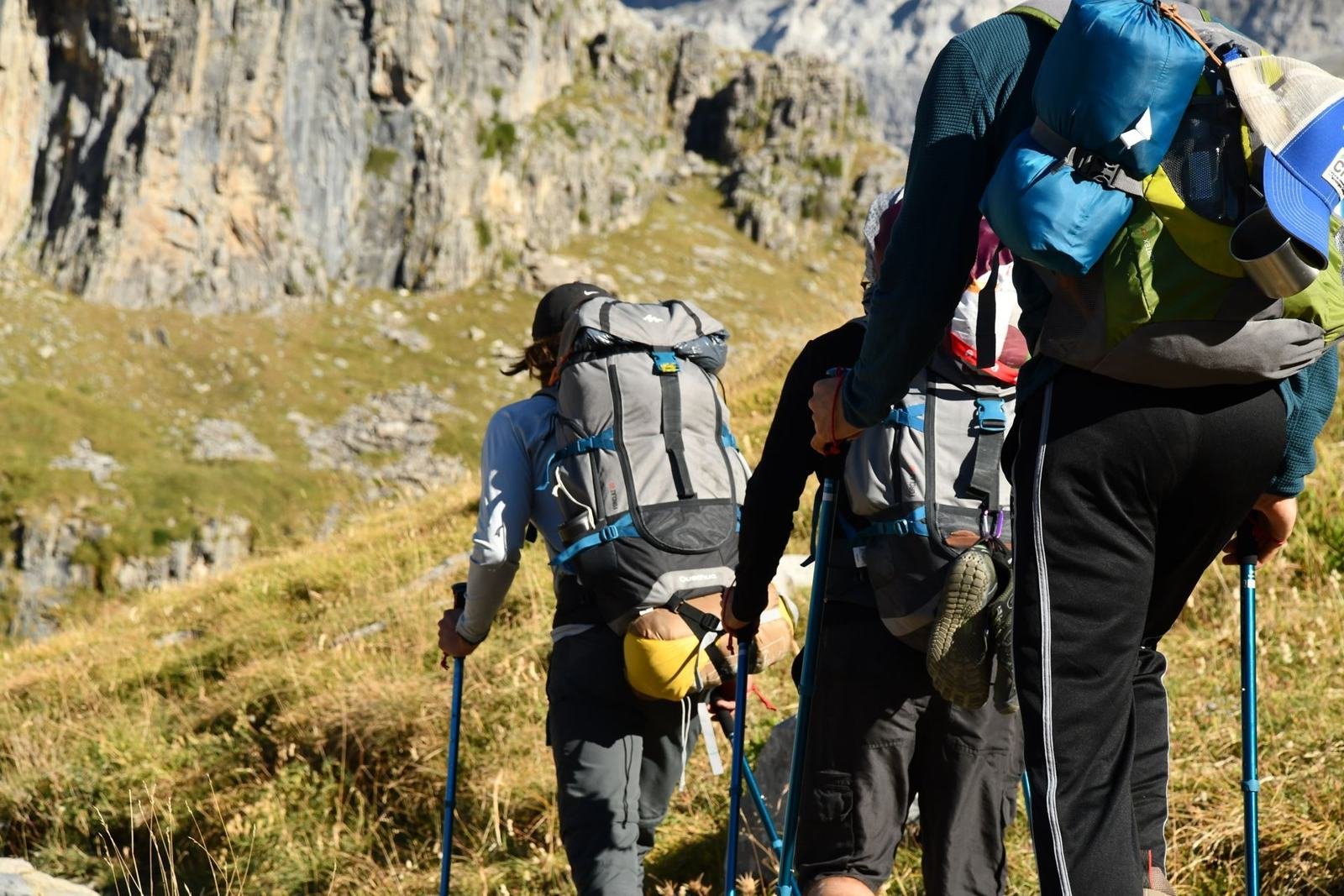
It is tempting to walk in shorts in July, but in the forest light, long clothes protect you from the sun, thorns, ticks and stings.
- Light-coloured, breathable long sleeves and long trousers (bees are less bothered by light colours).
- Closed walking shoes or boots, never sandals, and a hat.
- No strong perfume or scented sunscreen when you walk near the hives.
- Start early in the morning and avoid the midday heat.
Questions and answers
Can I collect mountain tea in Pili?
Yes, small amounts for your own use, in season (usually June to July). Cut the tops with scissors and never pull up the roots. If you are not sure about the plant, buy dried tea in the village shops.
When is mushroom season around Pili?
Mainly in autumn after the first rains (October to December) and again in spring. Never eat a wild mushroom unless an expert has identified it in person.
Is it safe to walk near the beehives?
Yes, if you keep your distance, stay out of the bees’ flight path in front of the hives and do not touch them. Wear light-coloured clothes and avoid strong perfume.
What should I take if I am allergic to stings?
Your prescribed adrenaline auto-injector, antihistamines and a basic first-aid kit. Tell your companions about your allergy. In an emergency call 112.
Is there a doctor near Pili?
Yes. Mantoudi Health Centre is about 20 minutes from the village, with doctors and an ambulance. It is not a hospital. In an emergency call 112, or 166 for an ambulance.
Where can I buy local honey, oregano and mountain tea in Pili?
In most of the shops (mini markets) of the village, which promote local products: honey from the village, oregano and mountain tea.
Can I hunt wild boar in Pili?
Only with a valid Greek hunting licence and during the official season, normally 20 August to the end of February. Dates and rules are set every year.